Stress on Site – Managing Mental Health as a Legal Duty
What's showing up in our project reviews lately:
Reactive not proactive management
Stress and fatigue are often discussed only after problems arise. Regular reviews of workload, planning, and supervision rarely include wellbeing as part of risk management.
Unclear responsibilities
Some projects still treat mental health as a HR or welfare matter rather than a health and safety requirement. Regulation 3 of the Management Regulations makes it clear that psychological risks must be assessed like any other hazard.
Lack of training for managers and supervisors
Supervisors play a key role in spotting stress early but are not always trained to recognise behavioural signs such as withdrawal, conflict, or fatigue.
Limited use of wellbeing tools
Few contractors use structured tools such as HSE's Talking Toolkit or Stress Indicator Tool to open conversations with their teams.
Overreliance on posters, not practice
Awareness campaigns are visible, but practical follow-up (regular check-ins, adjustments to demands or work patterns) is often missing.
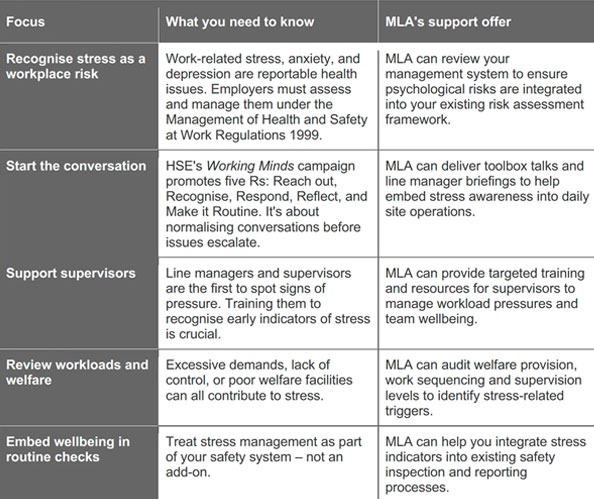
Key focus points (and what we recommend)